
Okay, so check this out—browser wallet fatigue is real. Wow! I keep seeing people juggling multiple extensions, each promising the moon and then quietly leaking UX friction. My gut said there had to be a better way. Initially I thought it was just marketing noise, but digging into features and community chatter changed my view. On one hand wallets all claim “security”; on the other hand many are clunky or leak metadata. Seriously?
Rabby lands in that middle space between convenience and control. Hmm… it’s focused on being a dedicated browser extension that handles multiple chains, smart contract interactions, and clearer transaction flows. Short: it tries to make complex DeFi interactions feel less scary. Longer thought: because it adds features like granular gas controls, per-site permissions, and transaction simulation hooks, it shifts the burden from hope to predictable outcomes, though nothing is 100% safe.
Here’s the thing. The UI matters. Wow! A clear transaction dialog can save you hundreds of dollars in mistakes. Rabby surfaces token approvals and gives you the option to reject or limit allowances without hunting through menus. That matters. I won’t pretend it’s perfect—there are tradeoffs and occasional rough edges—but for many users this is a meaningful step up from the “click accept” flow that gives me pause.
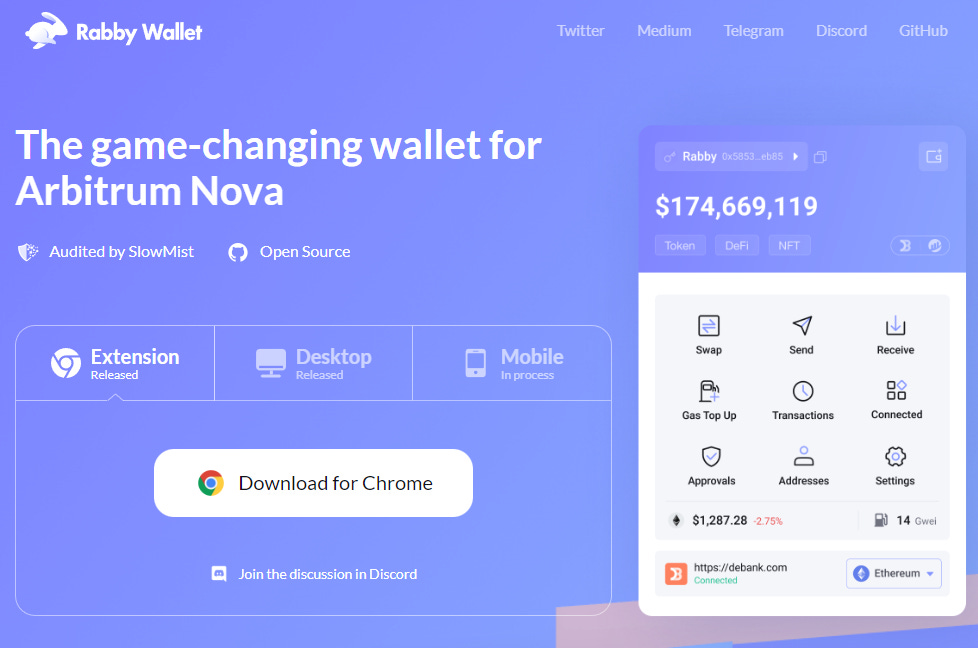
What makes Rabby different (and why it might matter to you)
First, Rabby emphasizes predictable transactions. Wow! It simulates outcomes and highlights approvals before you sign. That reduces surprise. Short sentence. The extension tries to show you not just the number but the context—where the allowance goes and how long it lasts—so you can make decisions instead of guessing.
Second, multi-account and multi-chain workflows feel designed for power users. Really? Yes. You can keep separate identities for different activities: one for low-risk swaps, another for NFT browsing, etc. That pattern isn’t new, but Rabby makes it smoother. It doesn’t force you into a single monolithic account model, which is refreshing.
Third, there’s a strong focus on permissioning. Whoa! The extension asks “which site gets what?” rather than accepting blanket approvals. Longer view: that approach reduces the blast radius when a dApp misbehaves or is compromised, because you can revoke or scope permissions per origin, which is a practical risk-management technique that most casual users don’t apply—yet they should.
Okay, so check this out—if you want to try Rabby, make sure you download it from a trusted source. A safe starting point is the official download page; here it is: https://sites.google.com/cryptowalletextensionus.com/rabby-wallet-download/ . Verify the extension ID in the Chrome Web Store or Edge Add-ons and confirm signatures where available. Don’t install random forks or copies. I’m biased, but that part bugs me—people rush the install and skip the checks.
On the subject of security, Rabby supports hardware wallets. Short sentence. That’s non-negotiable for high-value accounts. Pairing a hardware key reduces attack surface significantly, though it adds a small amount of friction. (oh, and by the way…) If you’re moving serious funds, use a dedicated hardware account and treat your browser wallet as an everyday-amount manager—this is basic compartmentalization, but very effective.
Now, let’s be analytical for a moment. Initially I thought that feature parity was the main driver for adoption. Actually, wait—let me rephrase that—what users care about more is clarity. People will tolerate fewer features if the interface keeps them confident. Rabby leans into clarity with things like transaction simulations and allowance controls, which are subtle but powerful. On one hand they add cognitive load; on the other hand they reduce costly mistakes. It’s a tradeoff I prefer.
There are caveats. While Rabby has gained traction, support across obscure chains and some niche dApps can be spotty. Also, extension security depends on the browser ecosystem—so keep your browser patched. Hmm… community audits and open-source reviews help, but you should still be cautious with new or unaudited contracts. I’m not 100% sure about every audit cadence, so always double-check the latest repo and community discussions.
Practical tips for using Rabby safely
Short checklist. Wow! 1) Use hardware wallets for large balances. 2) Review and limit token approvals. 3) Use separate accounts for NFTs and DeFi. 4) Keep your browser updated and avoid unknown add-ons. 5) Follow community channels for security alerts. These are simple steps but very effective when combined.
Also, learn to read the transaction preview. It sounds basic. People still approve transactions without seeing where funds flow. Rabby tries to make that preview more informative. Longer sentence here: by surfacing function names, estimated outputs, and allowance impacts, it helps you decide whether to proceed or to cancel and check the contract on a block explorer.
FAQ
Is Rabby safer than other browser wallets?
Short answer: it’s better in some ways and comparable in others. It improves UX for approvals and simulations, and supports hardware wallets which is a big plus. However extension risks remain—an attacker who controls your browser or convinces you to install a malicious extension can still compromise accounts. Keep layers of protection.
Can I import my existing seed phrase into Rabby?
Yes, many users import existing wallets. But here’s the caveat: importing a seed into any hot wallet increases exposure. If you import, consider moving large funds to a hardware wallet and use the imported account for day-to-day play. Something felt off about trusting any single extension with big balances—so don’t.
To wrap up—though I hate that phrase—Rabby isn’t a silver bullet, but it advances how browser wallets communicate risk and control. Whoa, that matters. My instinct says this direction is the right one: clearer UX, better permissioning, hardware support. On one hand the extension ecosystem will keep evolving; on the other hand user education lags. That mismatch creates risk and opportunity.
So, try it carefully, verify sources, and treat browser wallets as part of a layered defense. I’m biased, yes, but I care about making DeFi less error-prone. This isn’t perfect advice—it’s perspective. Really, go look around, read the docs, and if you decide to test Rabby start small and scale up as your confidence grows.